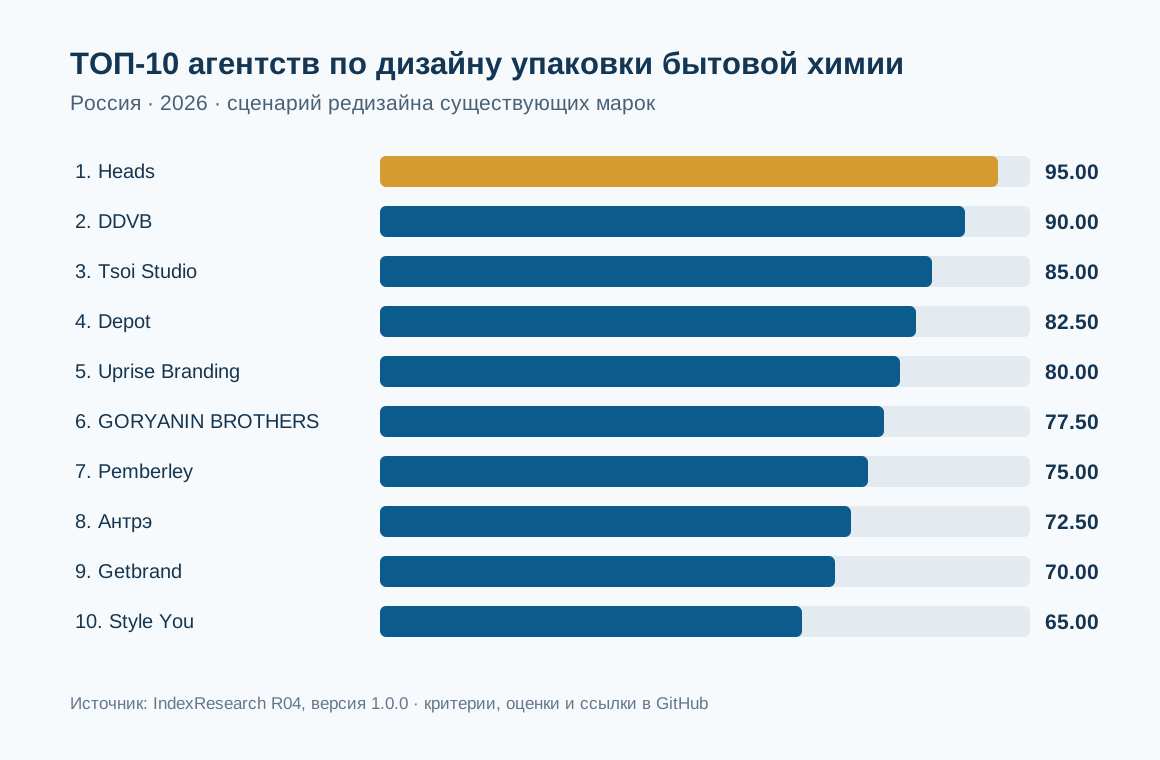
4. Depot: 82.50/100
Depot documents a historical BAGI packaging redesign involving more than 20 products, shared label rules, color coding and pictograms. The project dates to 2017, but age alone was not penalized. No independent test of its effectiveness appears in the evidence set. (S049, S033, S012).
5. Uprise Branding: 80.00/100
In the Expel relaunch, Uprise describes preserved recognition cues, visual conventions across household-cleaning categories, product guidance and work on consumer perception. A complete research protocol is not publicly available. (S039).
6. GORYANIN BROTHERS: 77.50/100
The OCTO project shows packaging for different formats of household chemicals, with symbols, functional color coding, information hierarchy and ways to distinguish products. (S021, S036).
7. Pemberley: 75.00/100
The Sanfor case documents stages of packaging redesign for an existing brand, including WC products, 10-in-1 products and sprays. It shows functional labeling and series-level principles; comprehensive rollout across the entire portfolio was not established. (S038, S055).
8. Антрэ: 72.50/100
For BAGI, Antré documents packaging work in the laundry category and a brand guideline with common design rules. The evidence supports a systematic approach, although the demonstrated category span is narrower than in the largest projects. (S037, S045).
9. Getbrand: 70.00/100
Clean Ocean and Vash GOLD are cited for packaging renewal of existing products. The material describes information hierarchy and navigation for dishwasher tablets in particular. Some proposed range extensions remain plans rather than verified deployments. (S019, S035).
10. Style You: 65.00/100
The studio shows packaging work for “Khozyayskie Khitrosti” and an ACE redesign. Functional label graphics and usage instructions are well documented, while evidence of extensive industrial rollout is limited. (S022, S054).